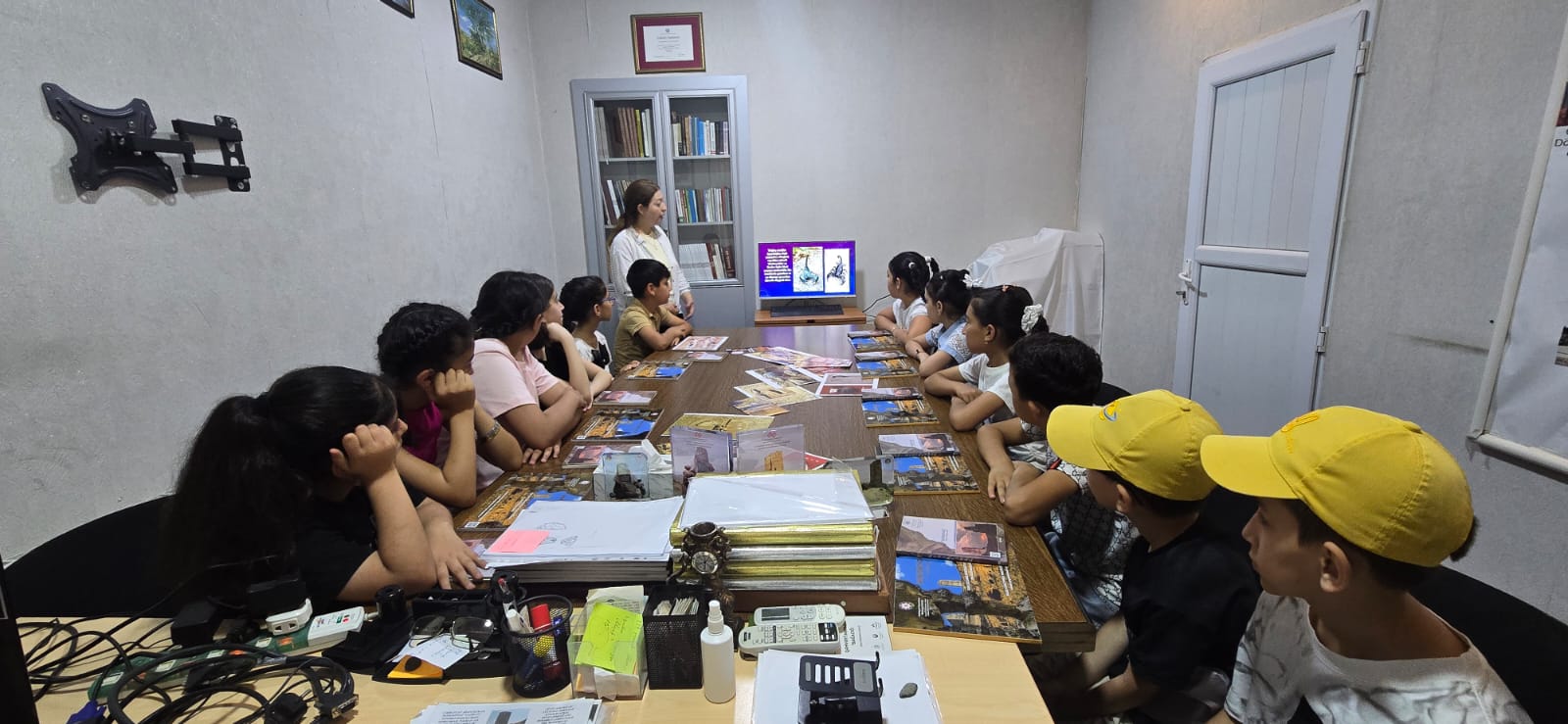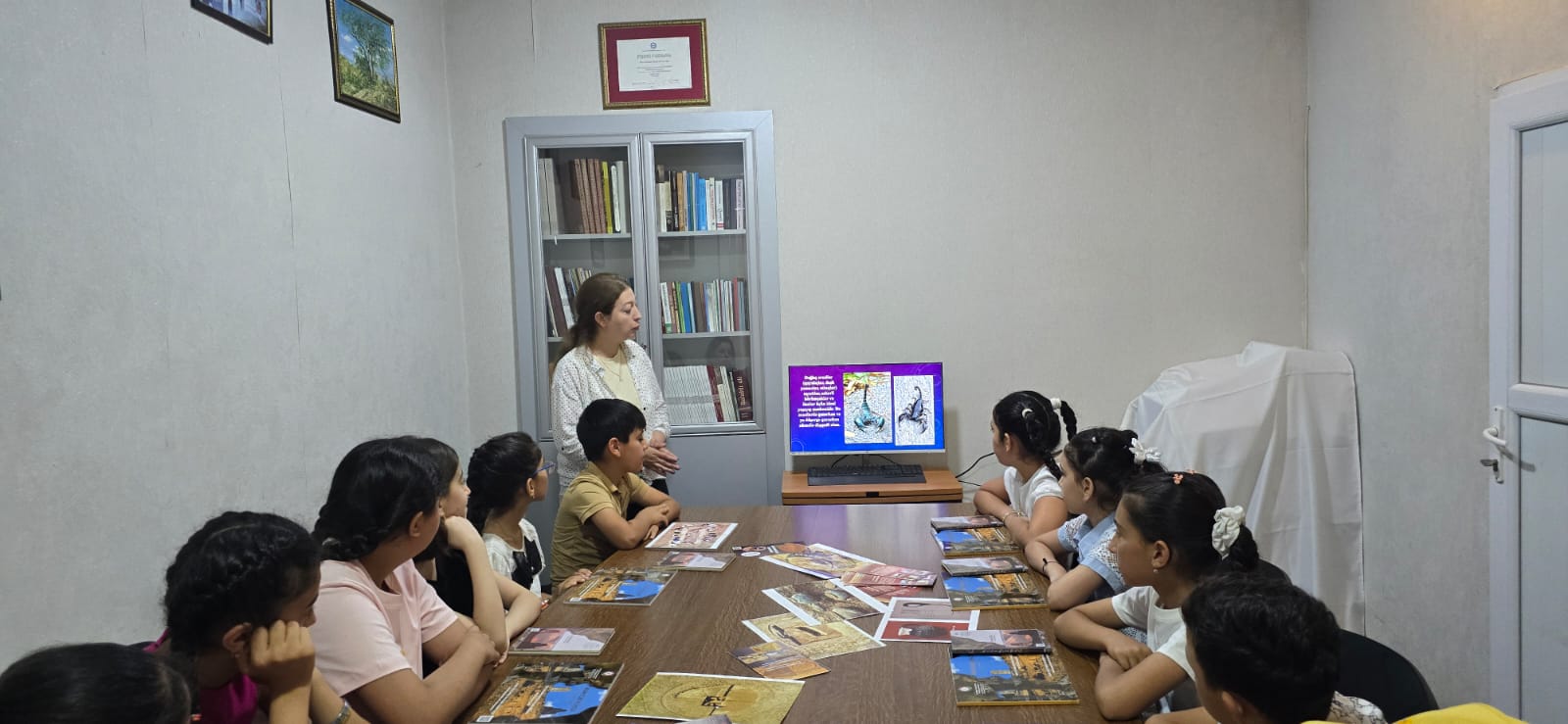
As part of its educational activities, the “Keshikchidagh” State Historical and Cultural Reserve, under the administration of the State Service of Cultural Heritage Conservation, Development and Restoration under the Ministry of Culture, organized an excursion for the students of the S. Mammadov Poylu village secondary school of the Aghstafa district at the reserve’s administrative building.
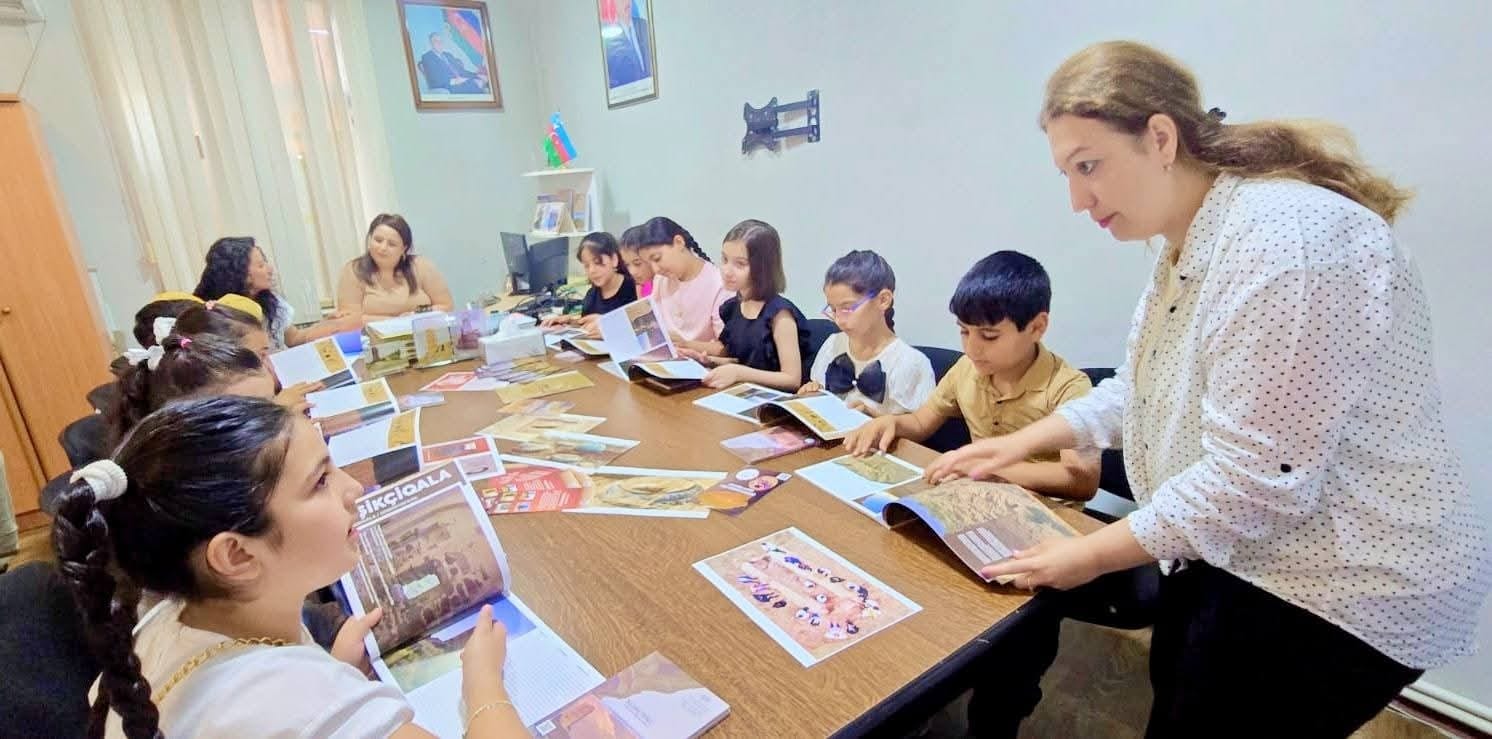
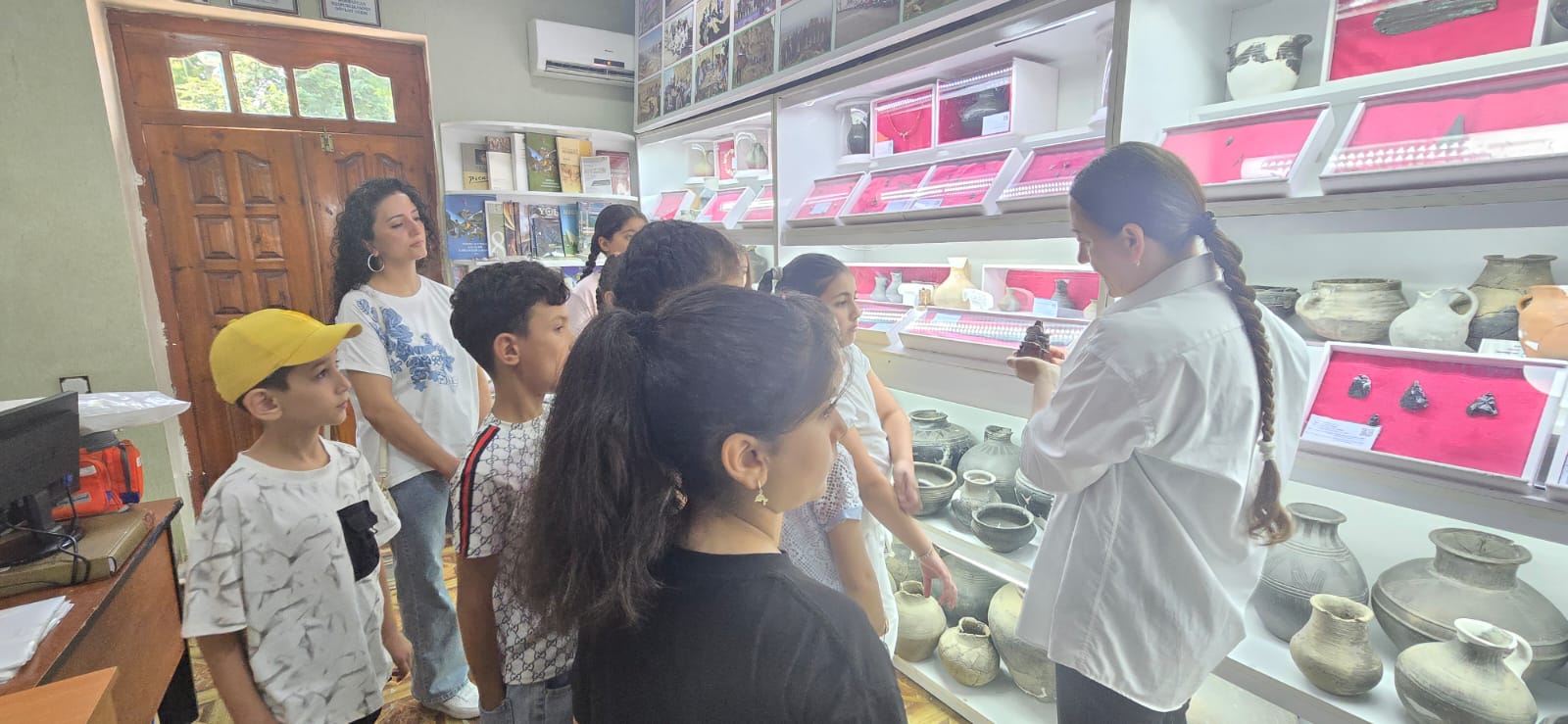
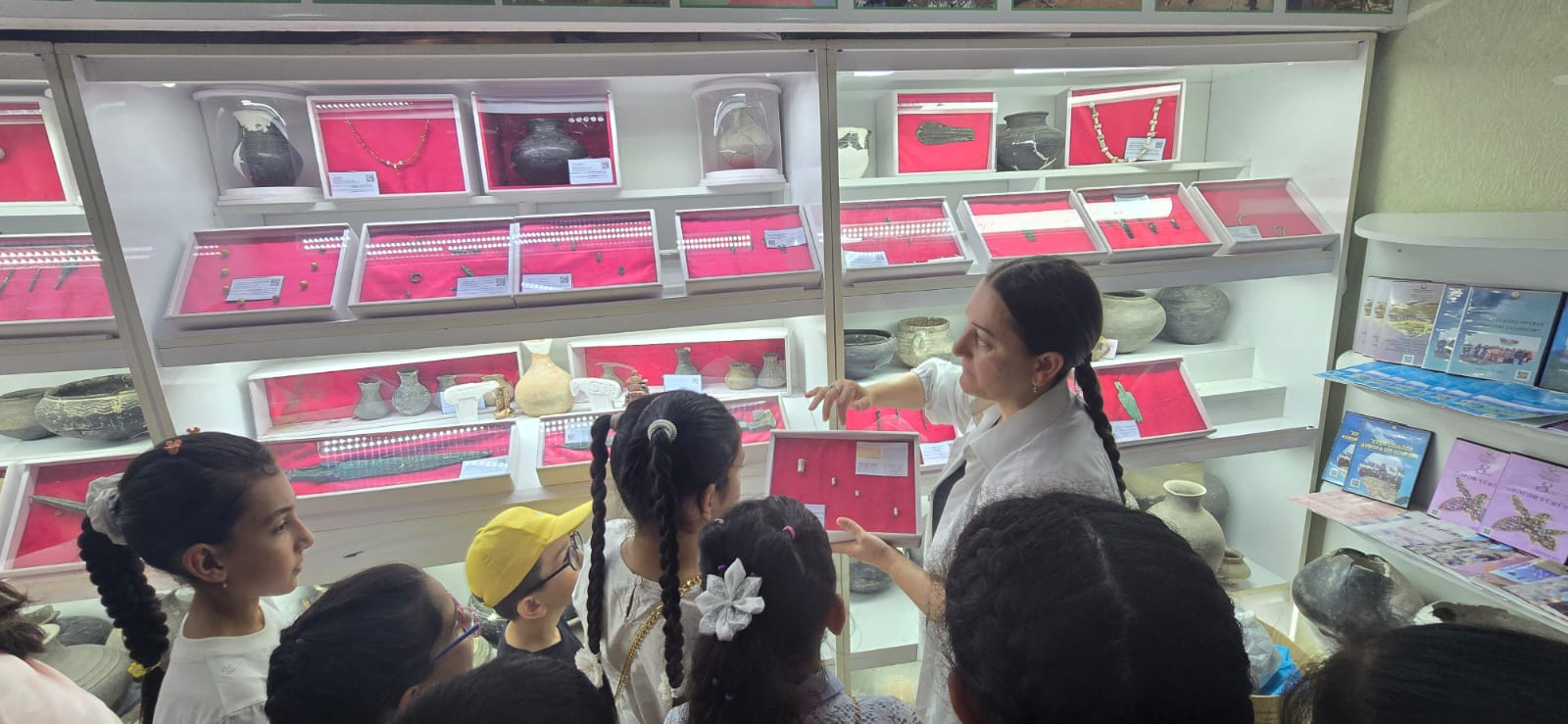
During the excursion, the schoolchildren first visited a small museum-type exhibition displaying tangible cultural heritage artifacts discovered during scientific and archaeological excavations in the Keshikchidagh Valley of Kurgans. The reserve’s staff provided detailed information on the historical, scientific, and cultural significance of the exhibits, emphasizing the vital role these findings play in studying the ancient history of Azerbaijan.
Following the exhibition, the students were briefed extensively on the geographical location, unique landscape, and diverse flora and fauna of the Jeyranchel area where the Keshikchidagh State Historical and Cultural Reserve is situated. It was noted that this arid region is home to wildlife species such as the Caucasian viper and venomous scorpions. In this regard, the importance of strict compliance with safety regulations within the reserve’s territory was highlighted, and the students were instructed on safety protocols and protection measures in the event of encountering venomous wildlife.
The primary objective of this educational excursion was to foster students’ interest in the rich historical and cultural heritage of Azerbaijan, raise awareness about the importance of safeguarding national heritage, and contribute to cultivating a sense of responsibility toward history, archaeology, and nature among the younger generation.