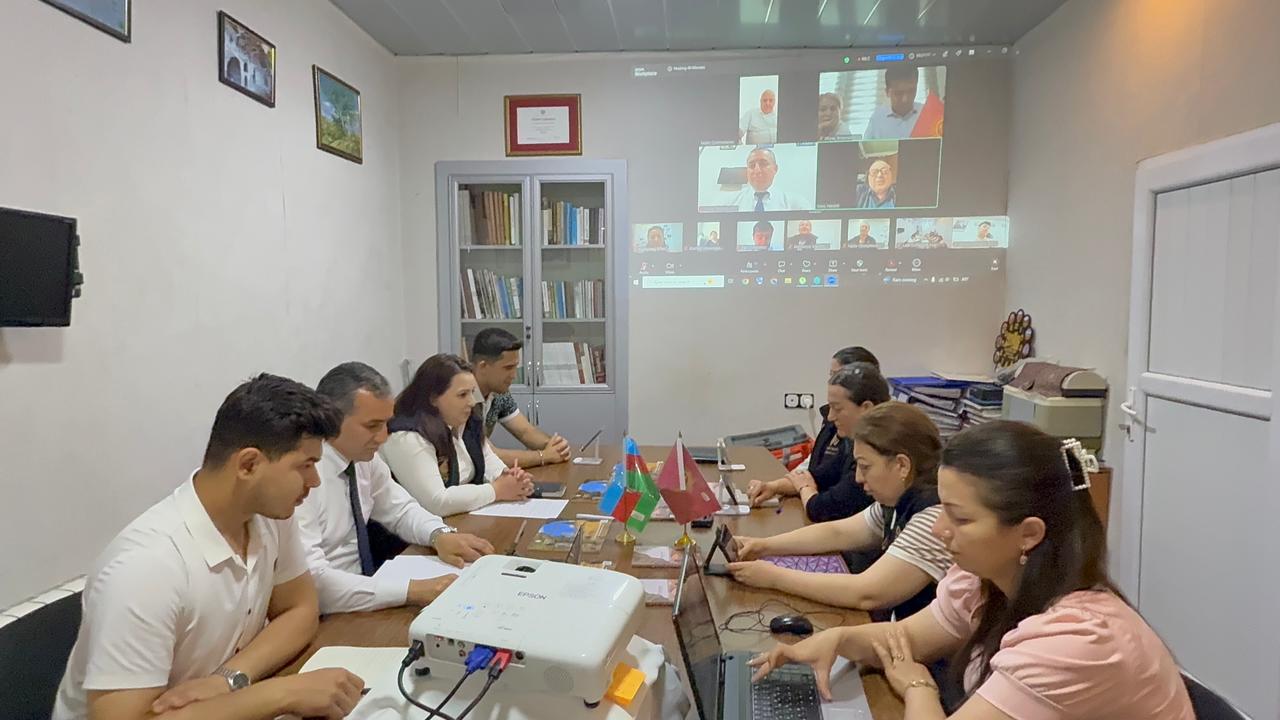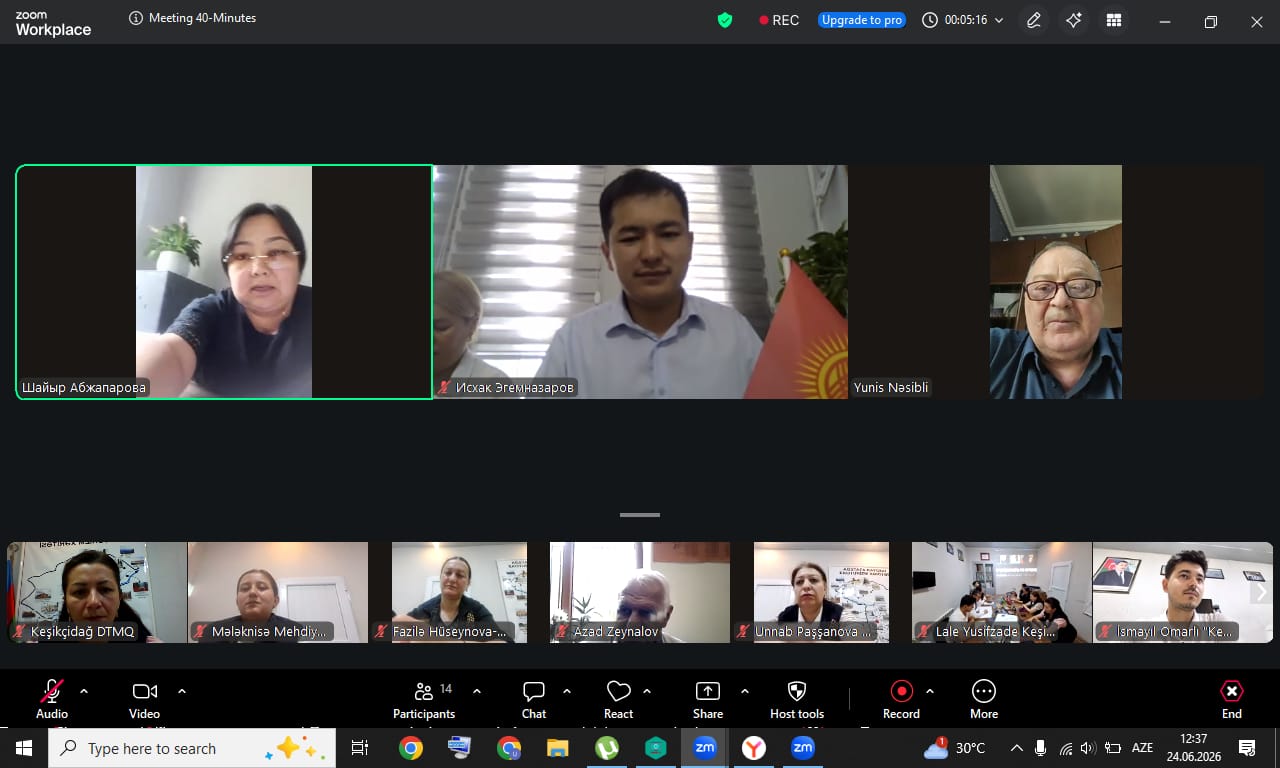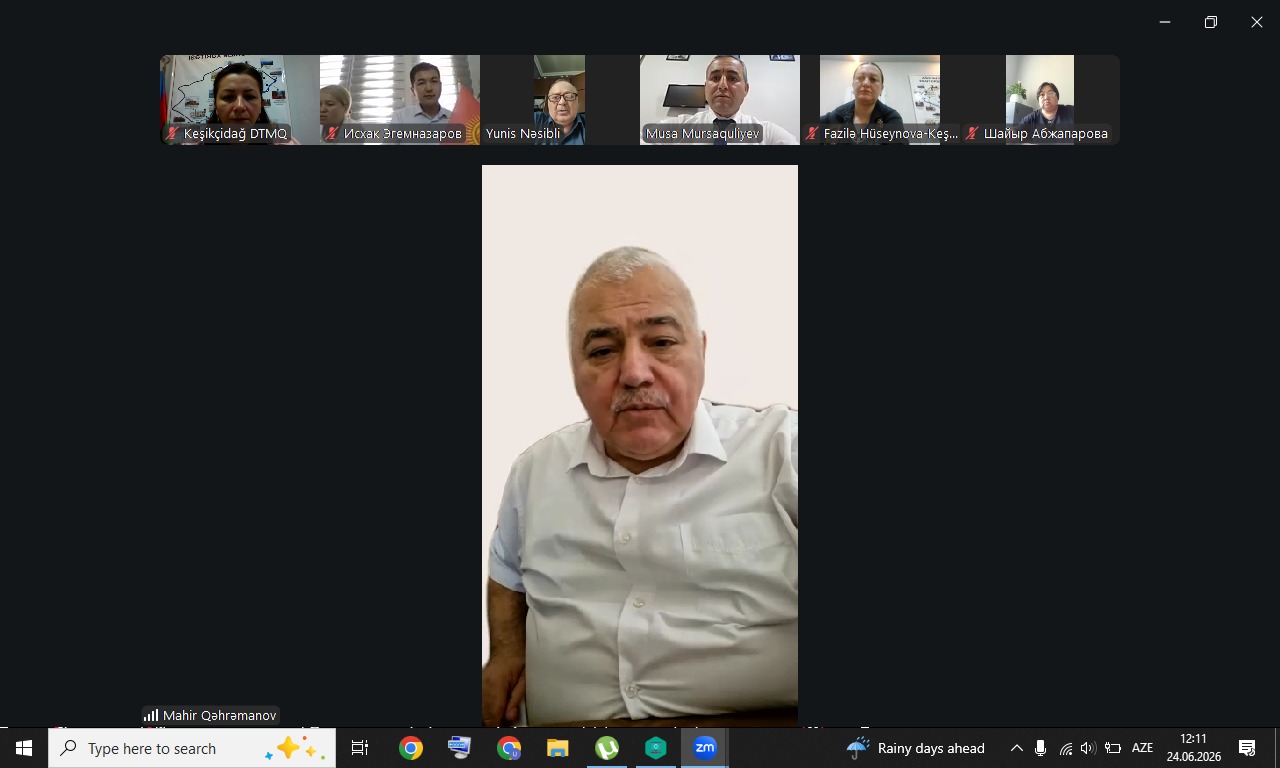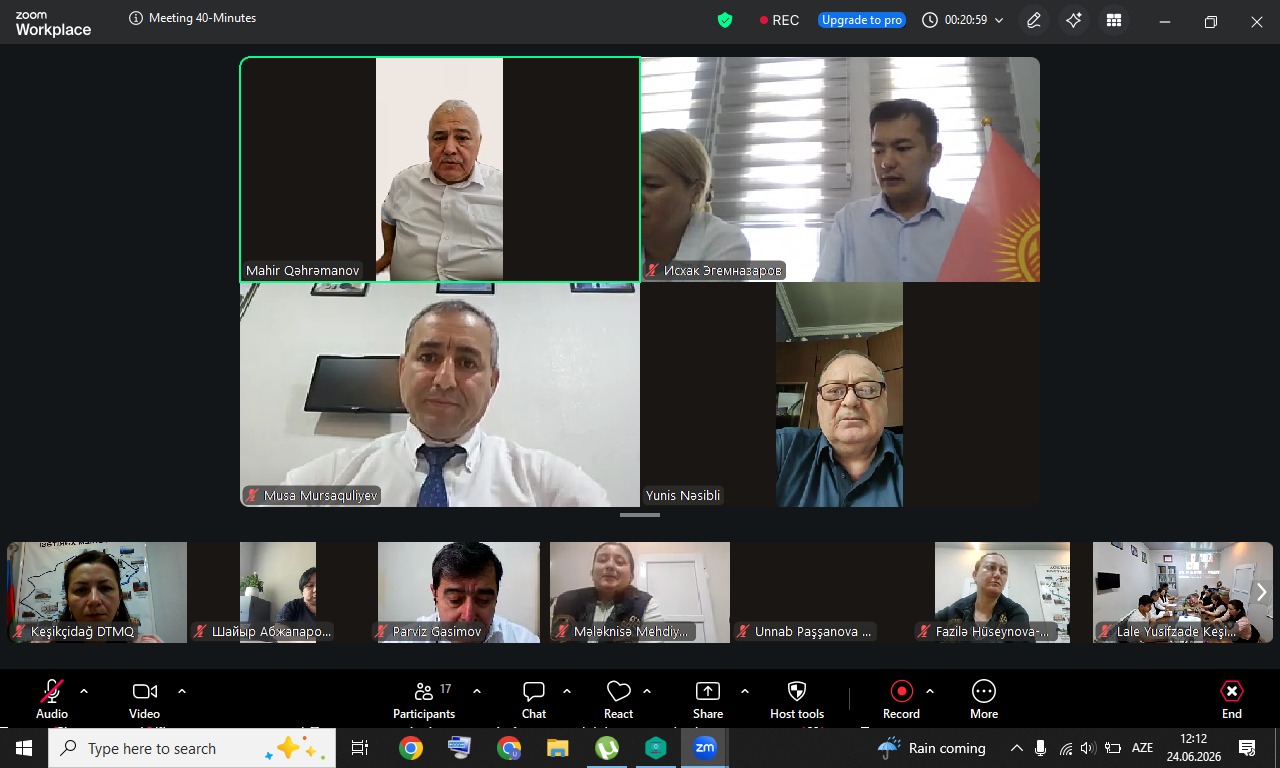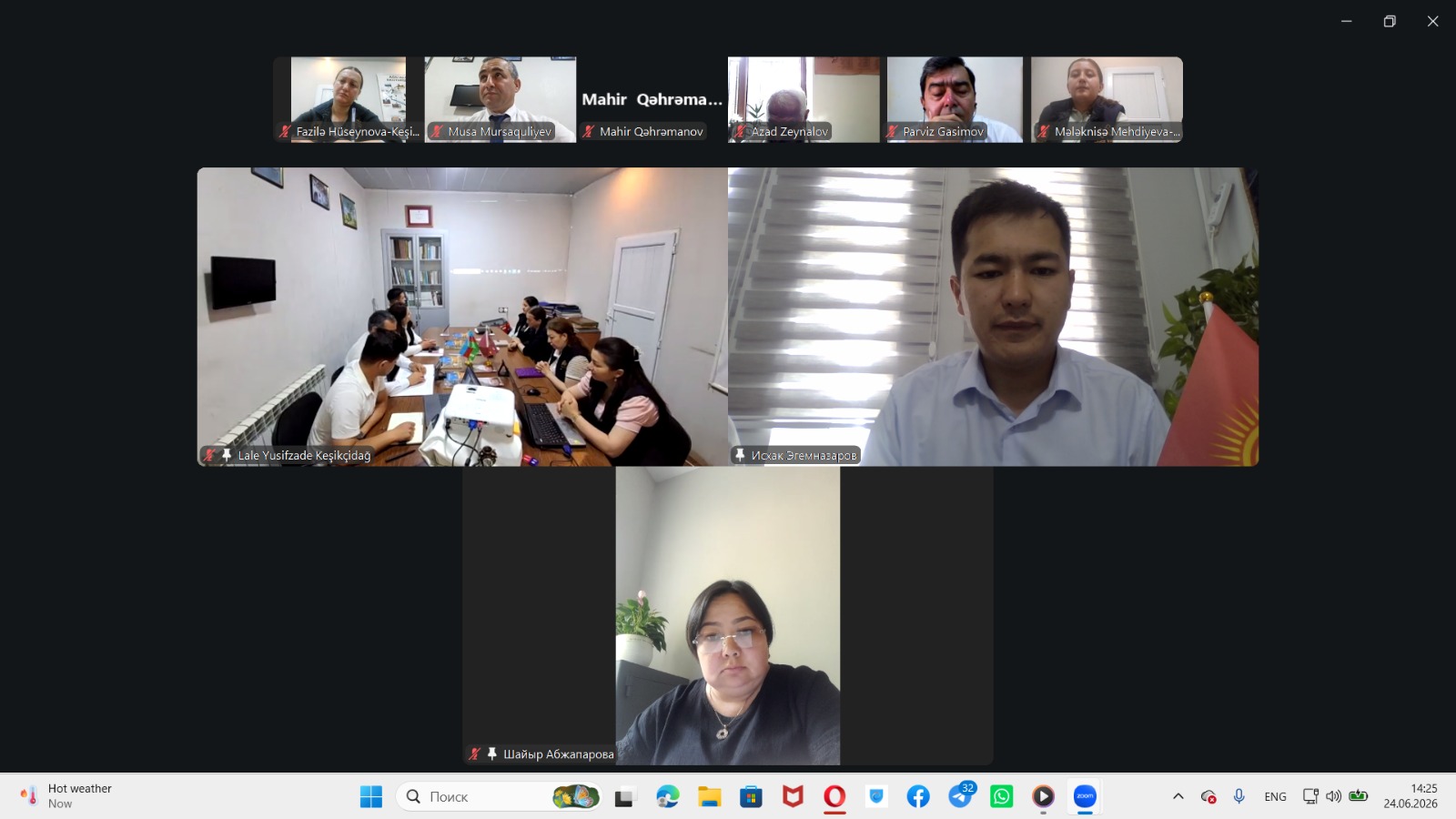
Prospects for Future Cooperation Discussed Between the “Keshikchidagh” State Historical and Cultural Reserve and the “Sulaiman-Too” National Historical and Archaeological Museum Complex of Kyrgyzstan.
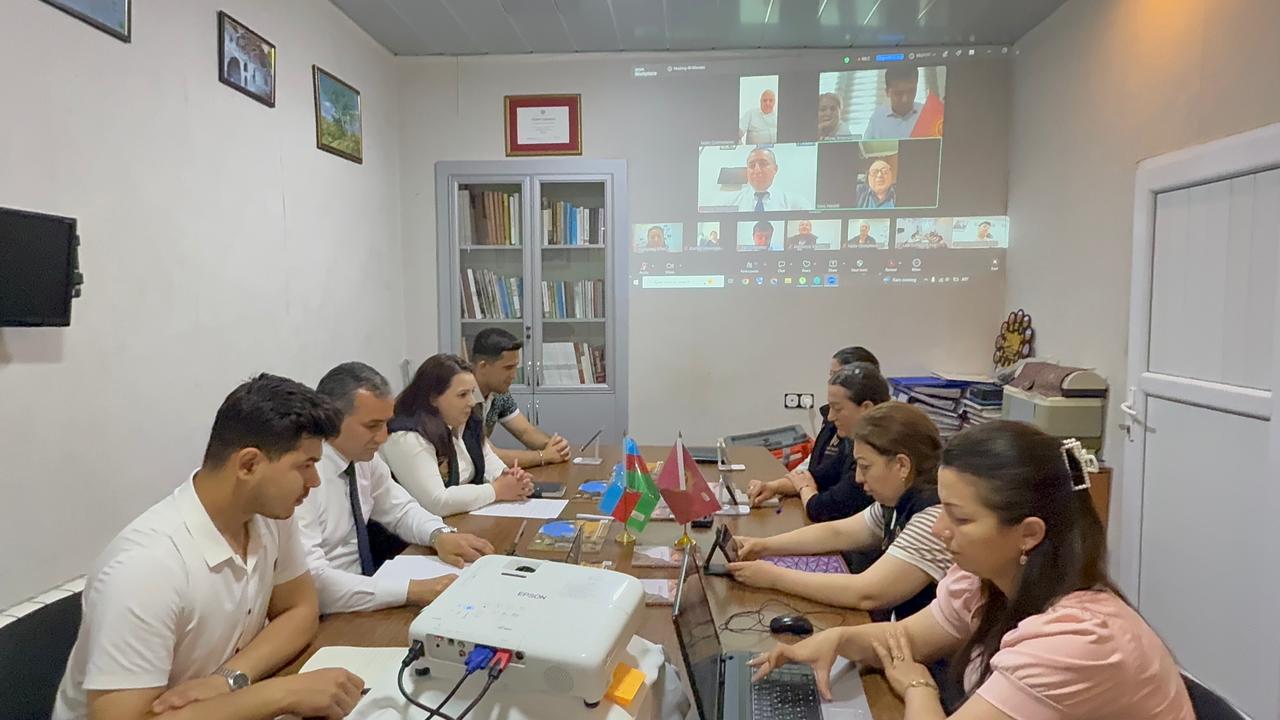
On June 24, 2026, an online meeting dedicated to the establishment of scientific and cultural cooperation between the “Keshikchidagh” State Historical and Cultural Reserve and the “Sulaiman-Too” National Historical and Archaeological Museum Complex of the Republic of Kyrgyzstan was held. The event was co-organized by the State Service for Protection, Development and Restoration of Cultural Heritage under the Ministry of Culture of the Republic of Azerbaijan and the Institute of Archaeology and Anthropology of the Azerbaijan National Academy of Sciences (AMEA).
The meeting was attended by the following officials and scholars Mahir Gahramanov — Head of the Reserve Management Sector, Department of Museums and Reserves of the State Service, Musa Mursaguliyev — Director of the “Keshikchidagh” State Historical and Cultural Reserve, Yunis Nasibli — Associate Professor at Baku State University (BSU), Candidate of Historical Sciences, Parviz Gasimov — Deputy Director for Digital Development and Artificial Intelligence at the AMEA Institute of Archaeology and Anthropology, PhD in History , Azad Zeynalov — Leading Researcher at the Institute, PhD in History, Khayrullo Ibaydullaev — Deputy General Director for Scientific Affairs and Foreign Relations of the “Sulaiman-Too” National Historical and Archaeological Museum Complex, İskhak Egemnazarov — Head of the Foreign Relations Department of the Complex, Shayyr Abzhaparova — Head of the Scientific and Educational Department of the Complex , Ainura Zhambylova — Head of the Archive and Museum Fund Department of the Complex. During the presentations, comprehensive information was provided on the institutional activities of the respective organizations, ongoing projects in the field of historical and cultural heritage preservation, and opportunities for international collaboration. The primary objective of the meeting was to establish long-term cooperative relations between the two institutions, define strategic directions for joint activities in the protection and promotion of cultural heritage, and deliberate on the feasibility of future collaborative projects. The discussions featured an exchange of academic insights regarding the organization of international online meetings and scientific symposia, implementation of mutual knowledge-sharing programs, and execution of joint conferences, seminars, exhibitions, and educational initiatives. Furthermore, parties explored avenues for expanding institutional alignment in preserving and raising global awareness of historical-cultural heritage. In conclusion, both parties expressed mutual commitment to fostering sustainable institutional advancement and executing joint academic and cultural initiatives.