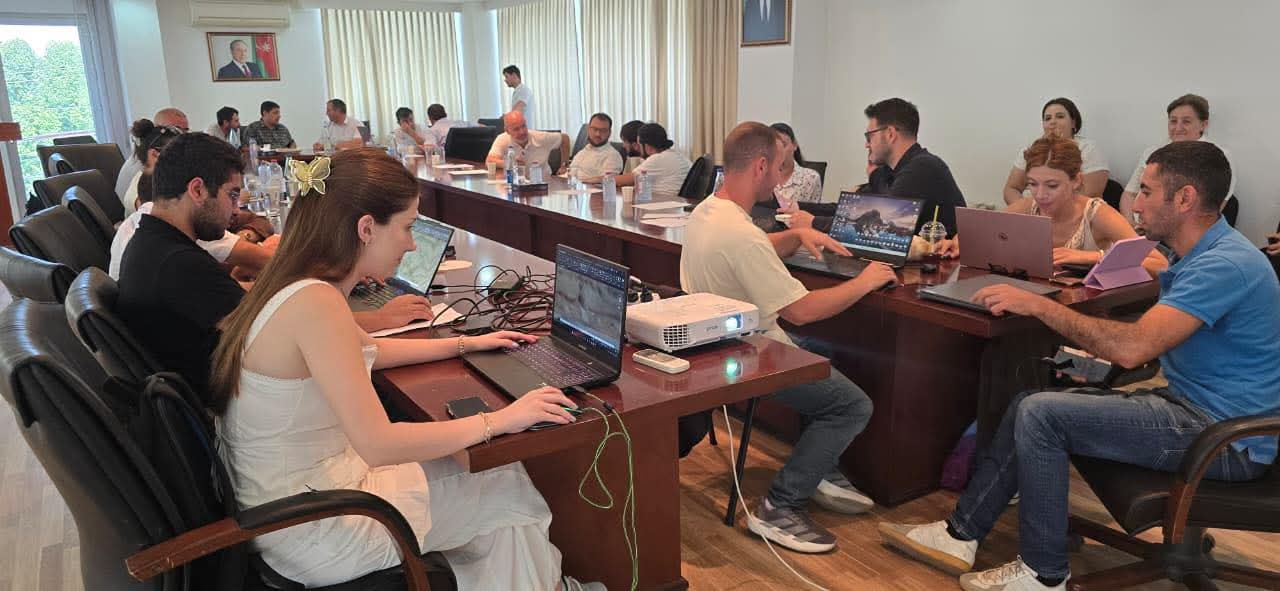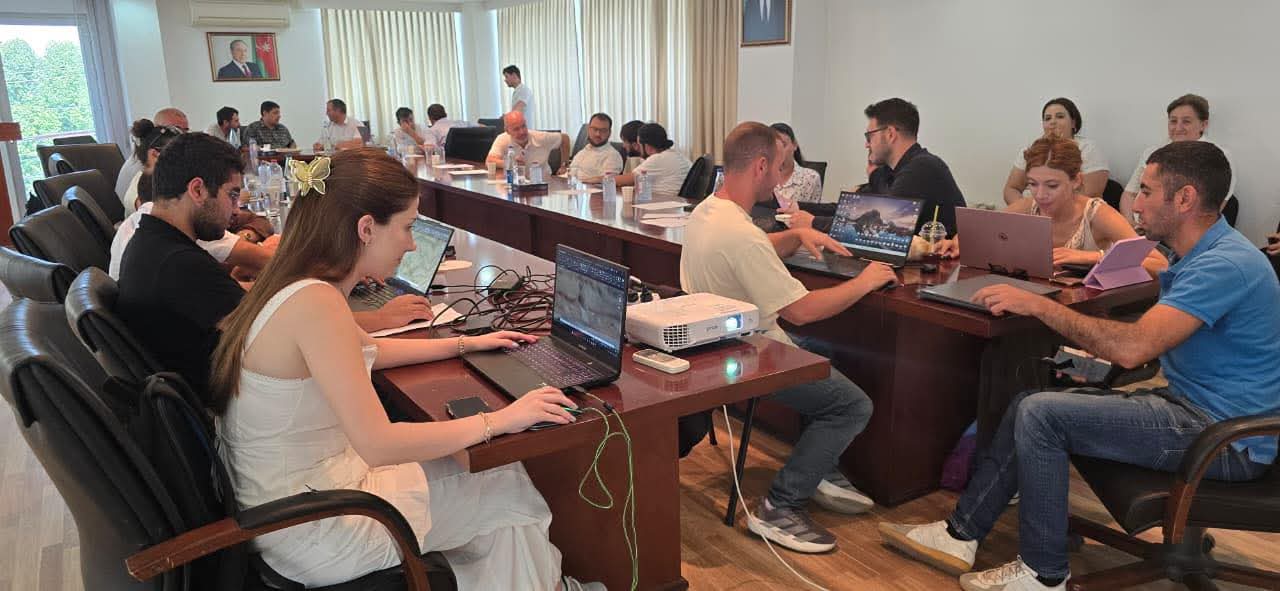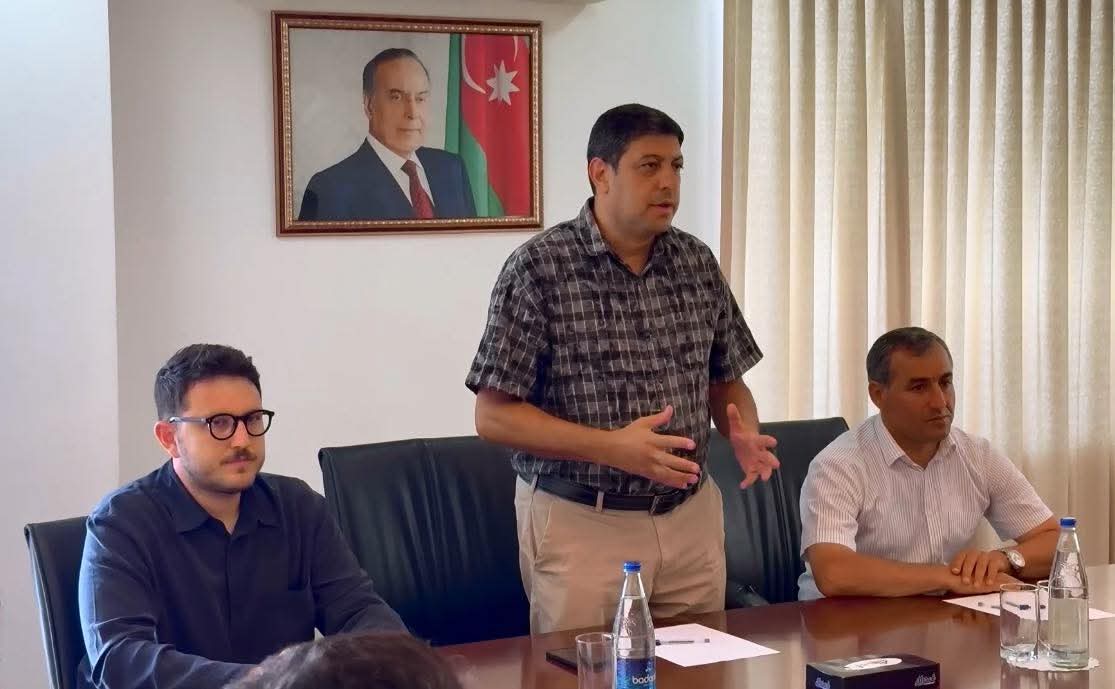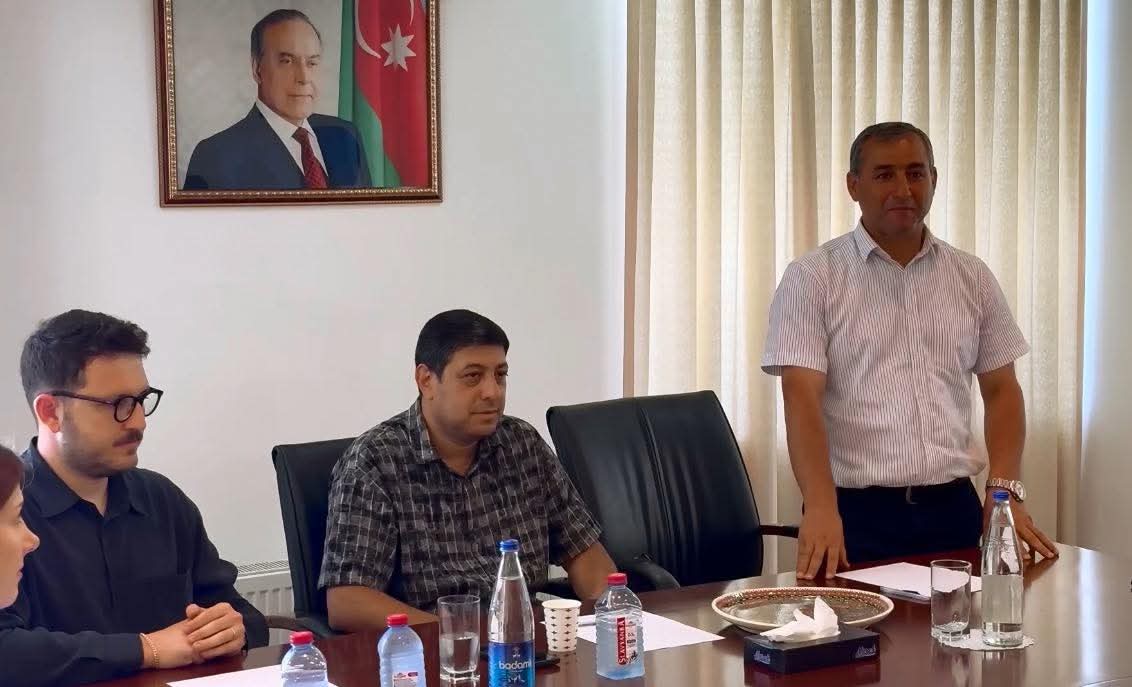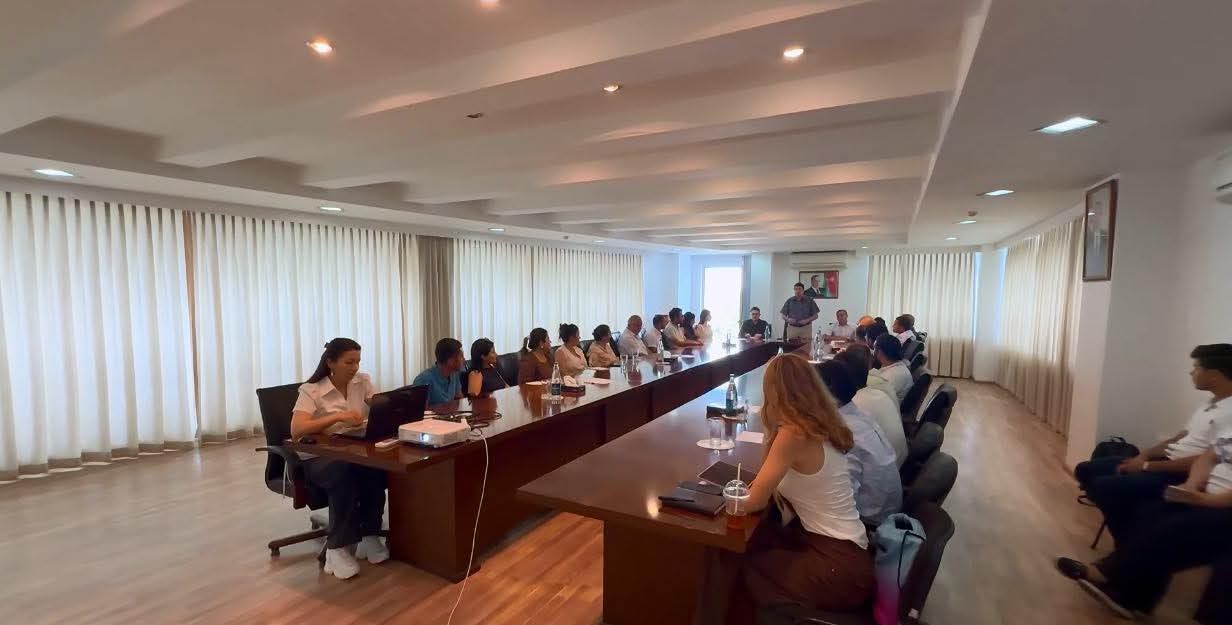
On August 8, 2026, a meeting dedicated to the conclusion of theoretical and practical training on “Digital Architectural Documentation and Methods” was held at the Heydar Aliyev Center in the Aghstafa region. The event was jointly organized by the “Keshikchidag” State Historical and Cultural Reserve—transferred to the management of the State Service for Protection, Development, and Restoration of Cultural Heritage under the Ministry of Culture of the Republic of Azerbaijan—and the Institute of Archaeology and Anthropology of ANAS.
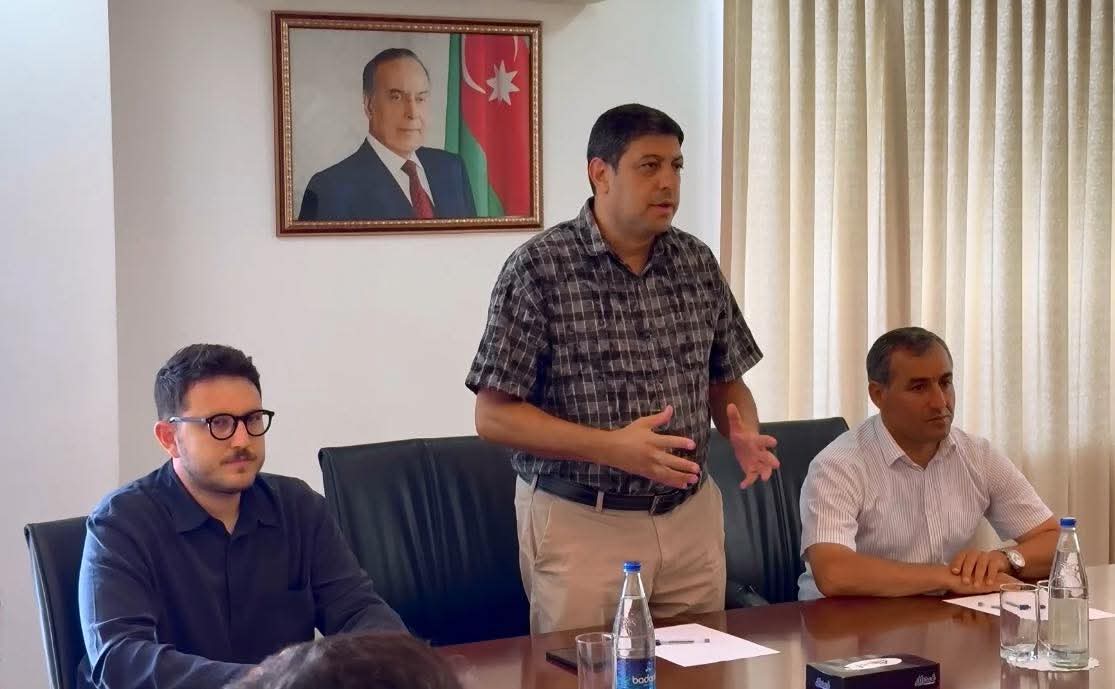
Opening the event, the Director of the Institute of Archaeology and Anthropology of ANAS, PhD in History, Associate Professor Farhad Guliyev, spoke about the measures implemented toward the digitalization of scientific fields in the country in line with modern requirements. He noted that during a meeting chaired by the President of the Republic of Azerbaijan, Ilham Aliyev, on February 11, 2026, important decisions regarding the development of the country’s digital future were made, and the “Action Plan for Accelerating Digital Development in the Republic of Azerbaijan for 2026–2028” was approved according to the set priorities.
F. Guliyev emphasized the special importance of the training among the measures carried out by the Institute toward digital development. He stated that the theoretical and practical training held on August 4–8 with the participation of Turkish specialists marked the beginning of a new stage in terms of applying digital technologies to Azerbaijani archaeology.
The Institute Director noted that for the first time, Azerbaijani archaeologists gained practical knowledge in creating modern digital imagery, preparing 3D models, classifying measurement data according to various criteria, documentation technologies, and using modern digital methods. It was highlighted that this knowledge would enable the creation of digital models of archaeological research areas according to modern standards in the future.
Farhad Guliyev expressed his gratitude to the Turkish experts—Dr. Zafer Derin from Ege University, researcher Sahin Mentese from Manisa Celal Bayar University, and specialist Hilal Beydemir from the Ministry of Culture and Tourism of the Republic of Turkey—for their support in conducting the training. At the same time, he highly appreciated the activities of the staff of the “Keshikchidag” State Historical and Cultural Reserve in organizing the training.
Speaking next, the Director of the “Keshikchidag” State Historical and Cultural Reserve, Musa Mursaguliyev, spoke about the attention paid by the Ministry of Culture and the State Service for Protection, Development, and Restoration of Cultural Heritage to scientific research work conducted on cultural heritage sites. He emphasized the importance of cooperation between state institutions and scientific research organizations toward the digitalization of archaeological studies.
M. Mursaguliyev also noted that the training sessions were significant for the further development of cooperation between Azerbaijan and Turkey in the field of science and cultural heritage.
In their speeches, Turkish specialists Sahin Mentese and Hilal Beydemir expressed their gratitude for the hospitality shown in Azerbaijan. They emphasized that during the training, they became acquainted with research conducted in the Keshikchidag and Shamkir areas, as well as at the Kharkhar necropolis in the Gadabay region and the Goytepe settlement in the Tovuz region, noting that Azerbaijani archaeology possesses great scientific potential.
The trainers expressed hope that cooperation in this direction would expand in the future and that scientific exchange between Azerbaijan and Turkey in archaeological research would deepen further.
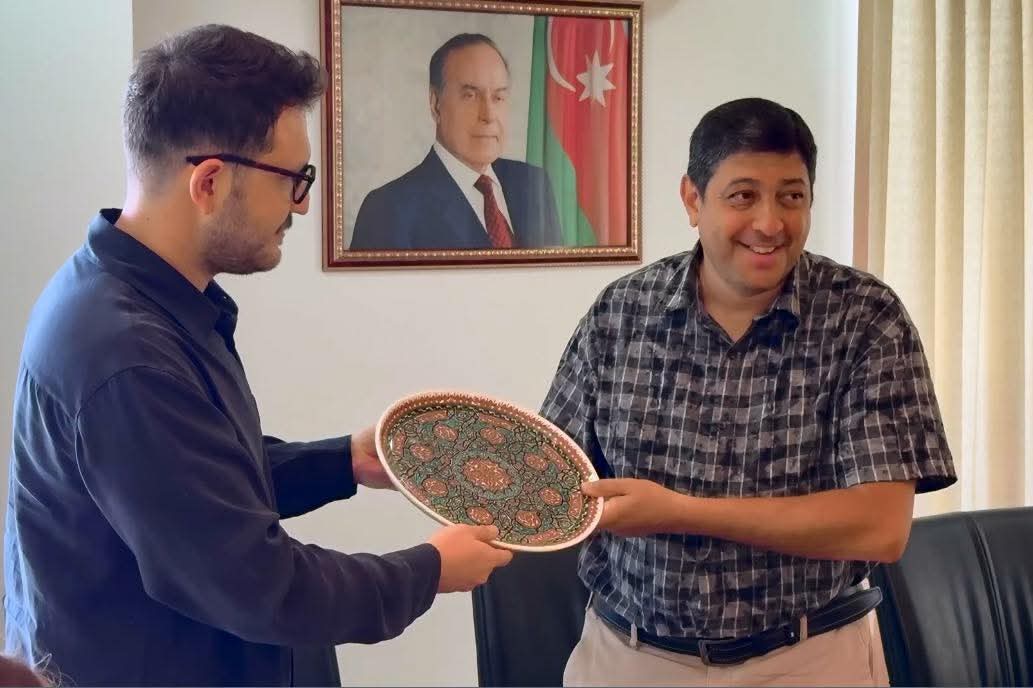
On behalf of the Turkish trainers, Sahin Mentese presented a porcelain platter decorated with ancient Turkish patterns to the organizers of the training.
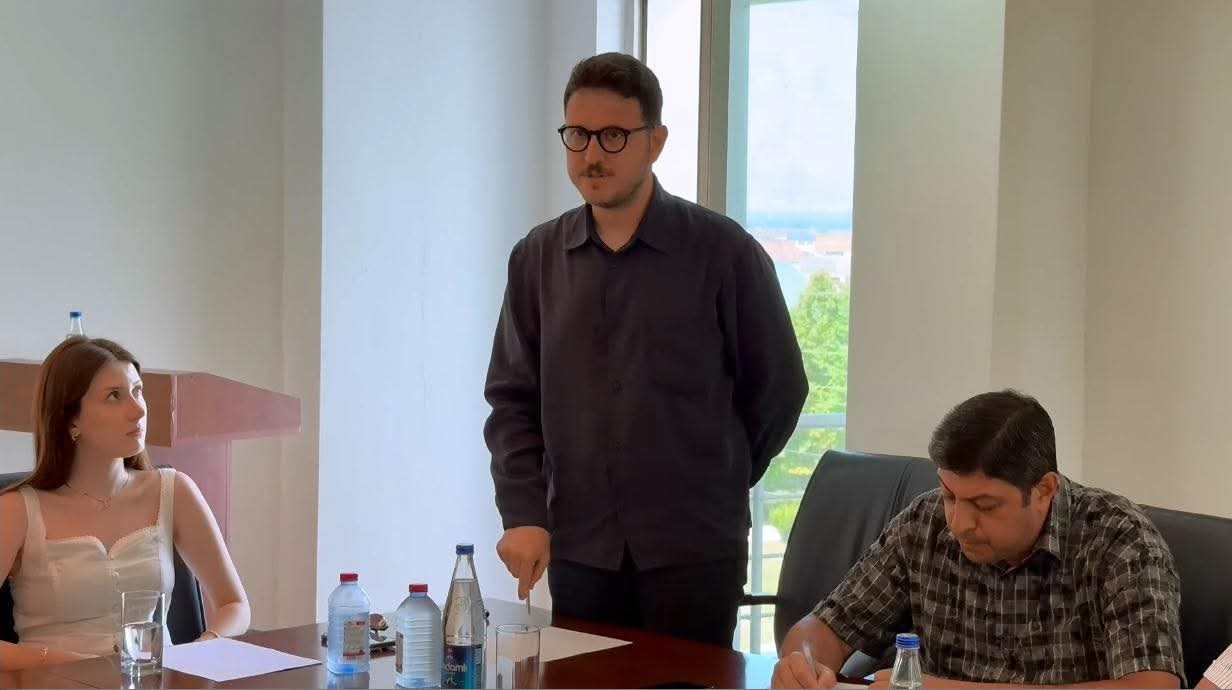
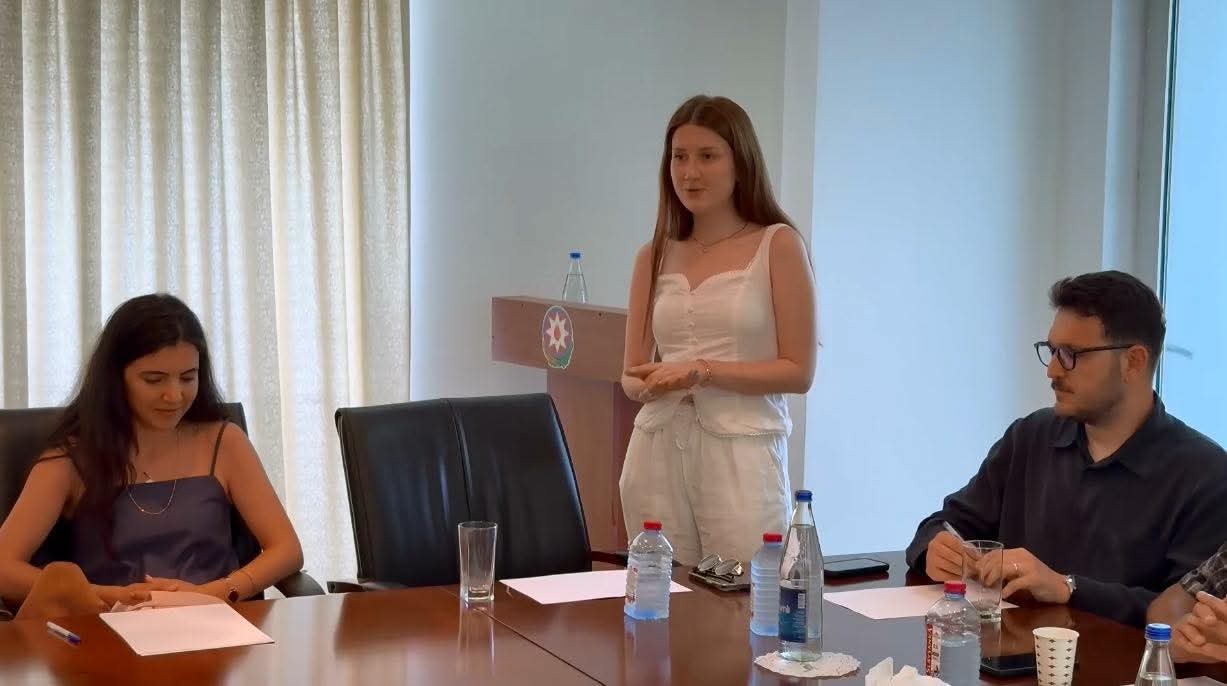
Then, Aqil Aliyev, a doctoral student and young archaeologist at the Institute of Archaeology and Anthropology of ANAS, spoke on behalf of the training participants to express gratitude to the Turkish specialists and the organizers. He noted that applying the newly acquired knowledge and skills in archaeological field and desk studies would contribute significantly to the development of Azerbaijan’s digital archaeology and its broader representation on the international scientific stage.
Following the official part of the event, a final theoretical-practical session was conducted by the Turkish trainers on processing 3D images of monuments and excavation sites in various directions, as well as creating three-dimensional images of archaeological finds using LiDAR technology.
Thus, the 4-day theoretical and practical training on “Digital Architectural Documentation and Methods” concluded.
Alongside the young staff members of the Institute of Archaeology and Anthropology of ANAS, employees of the “Archaeology and Ethnography” department of the Sheki Regional Scientific Center of ANAS also participated in the training sessions.
It should be noted that new equipment acquired through procurement by the Institute of Archaeology and Anthropology of ANAS, including Apple iPad Pro tablets, was used within the framework of the training. Practical work on the digital documentation of archaeological monuments, LiDAR scanning, and the preparation of three-dimensional models was carried out using this equipment.