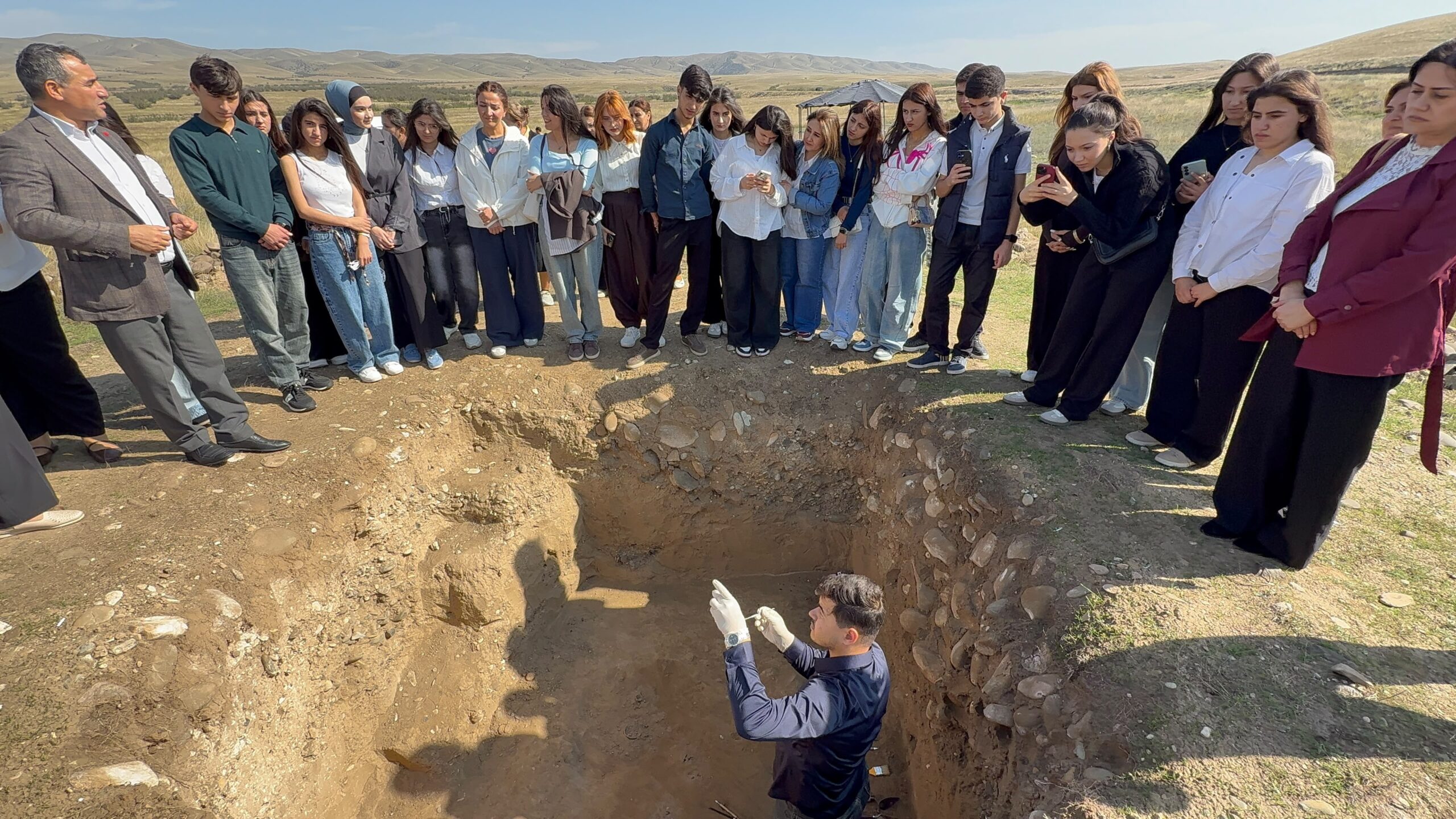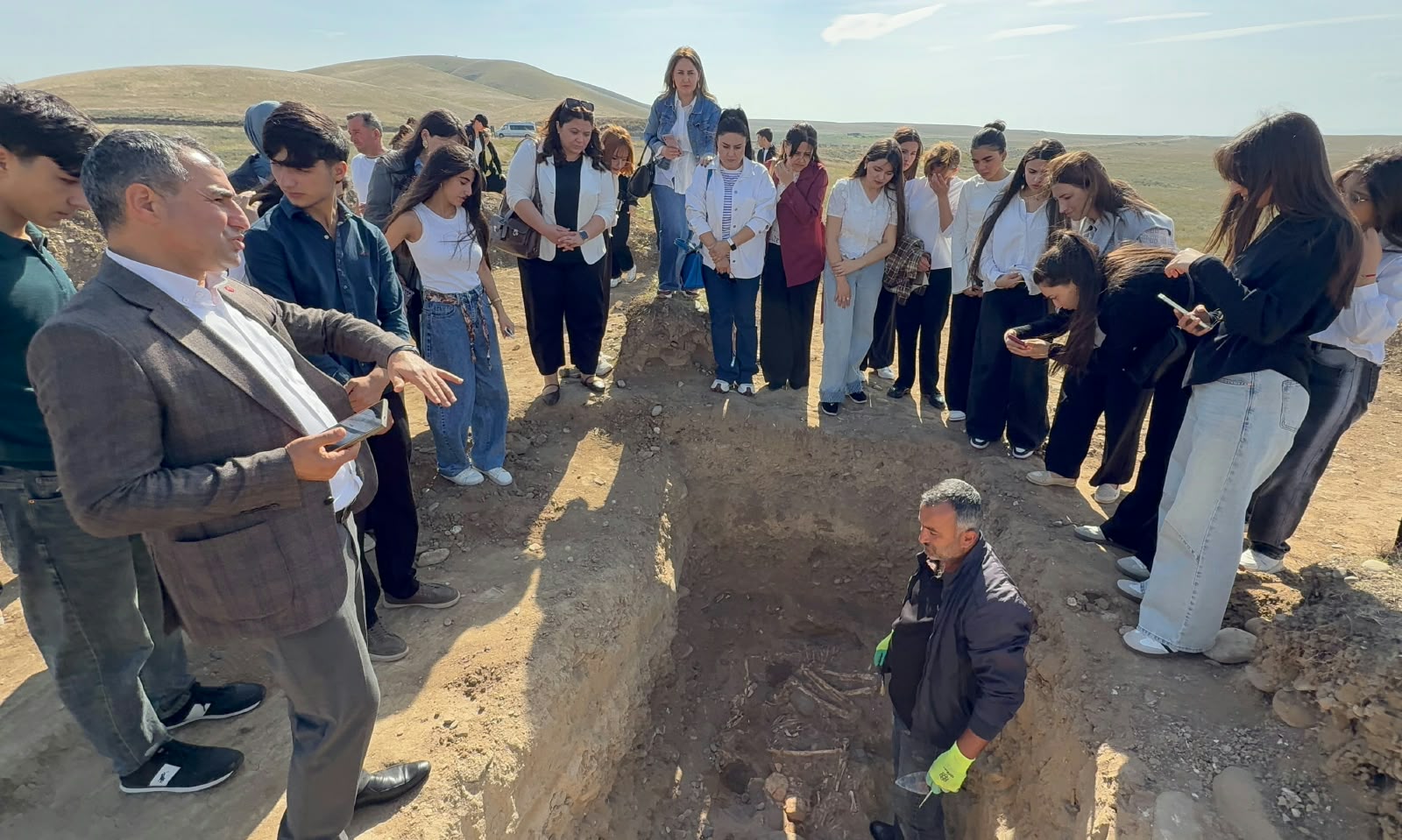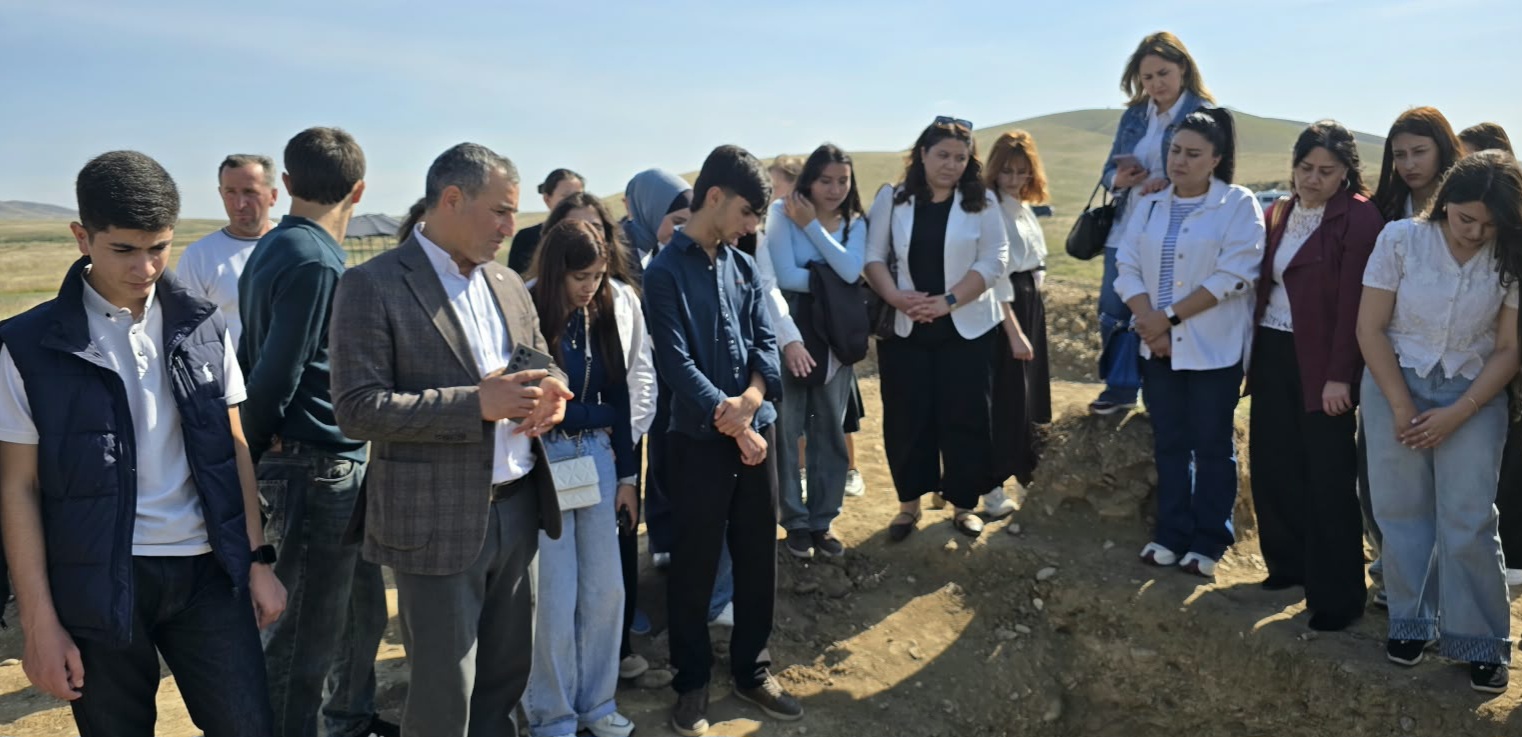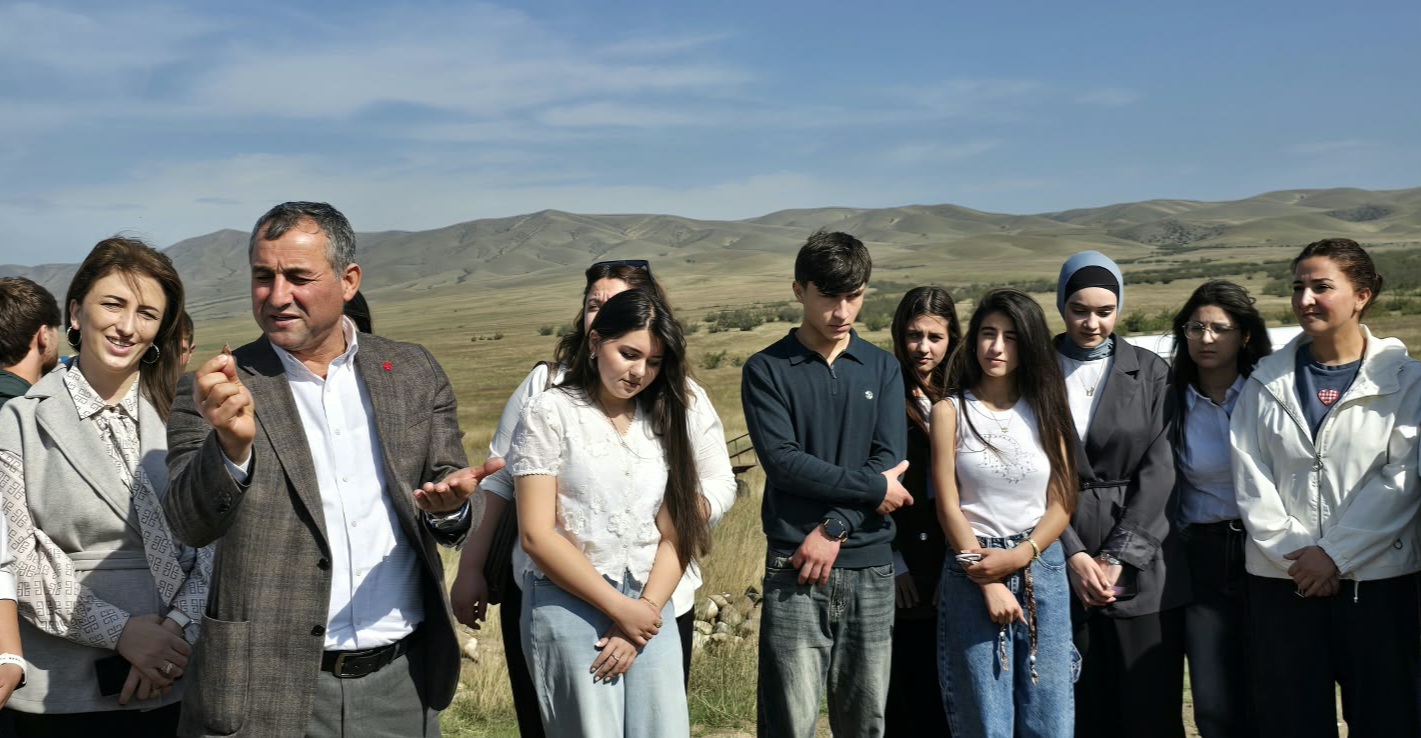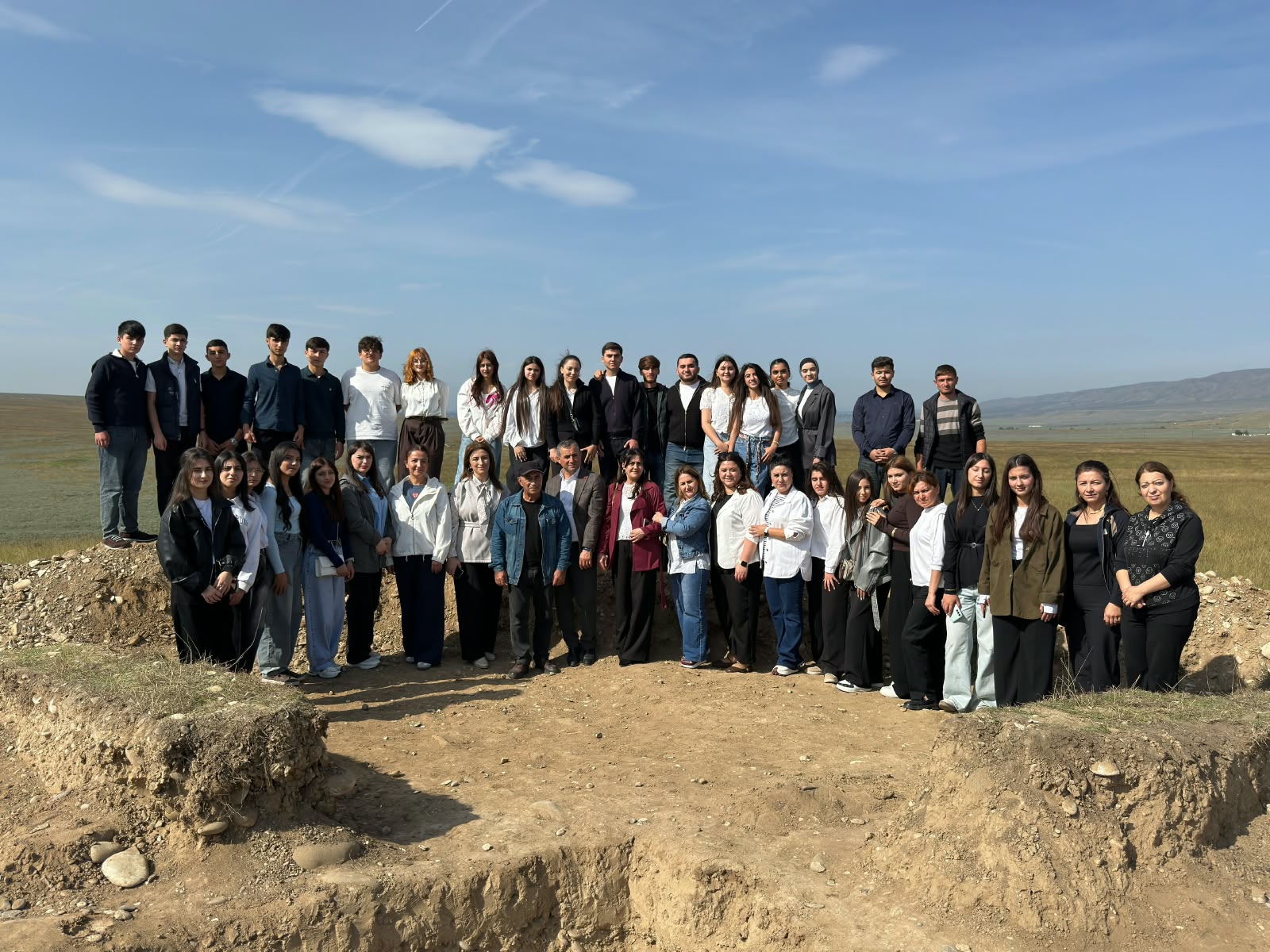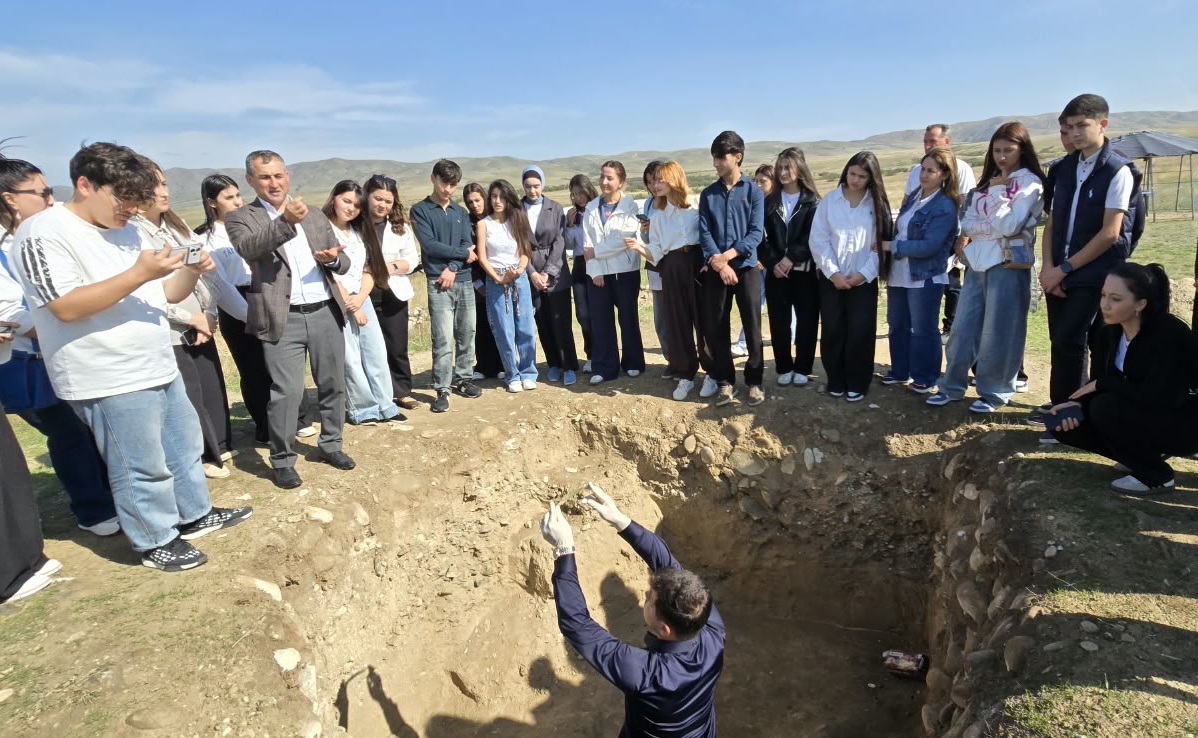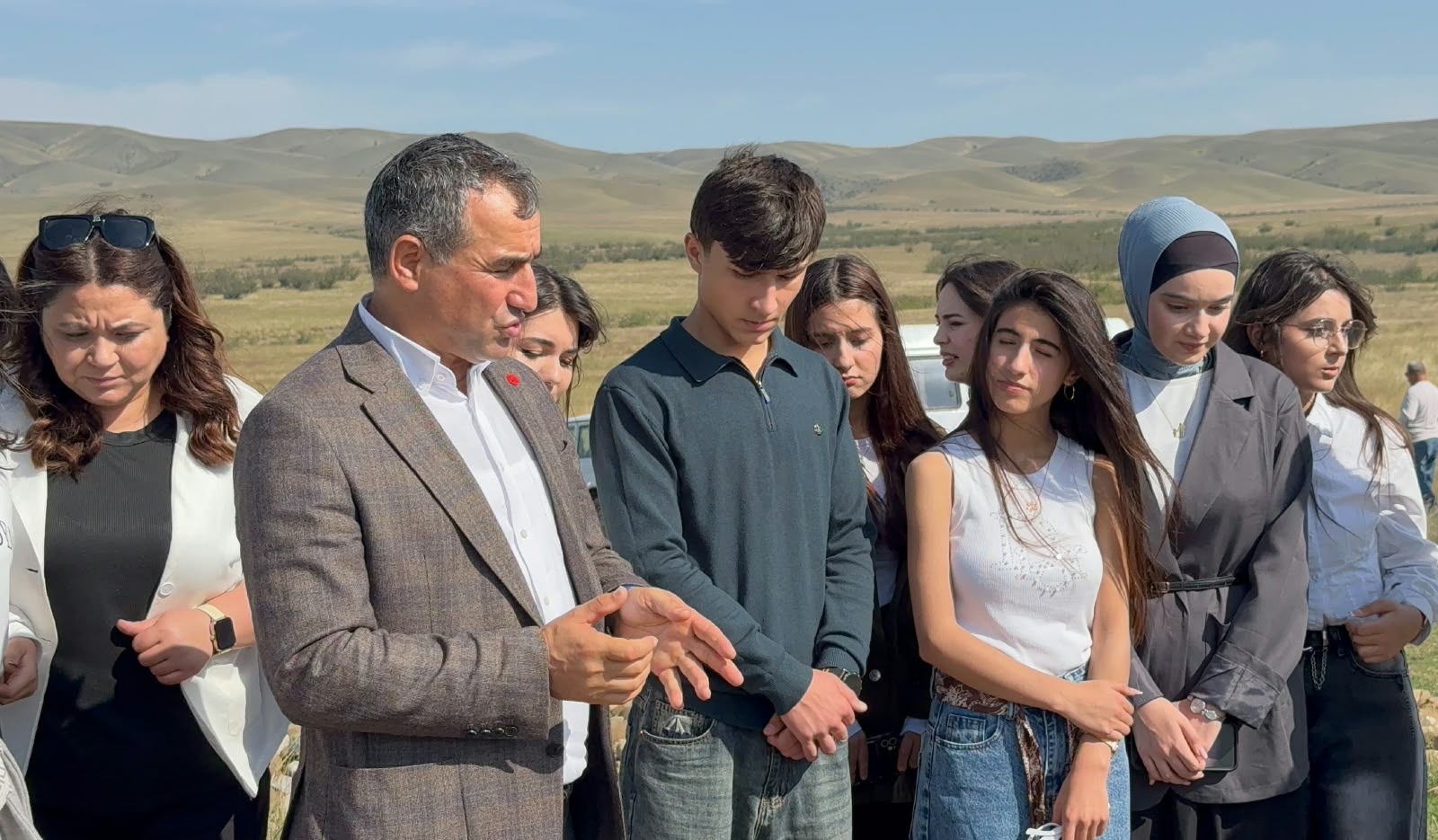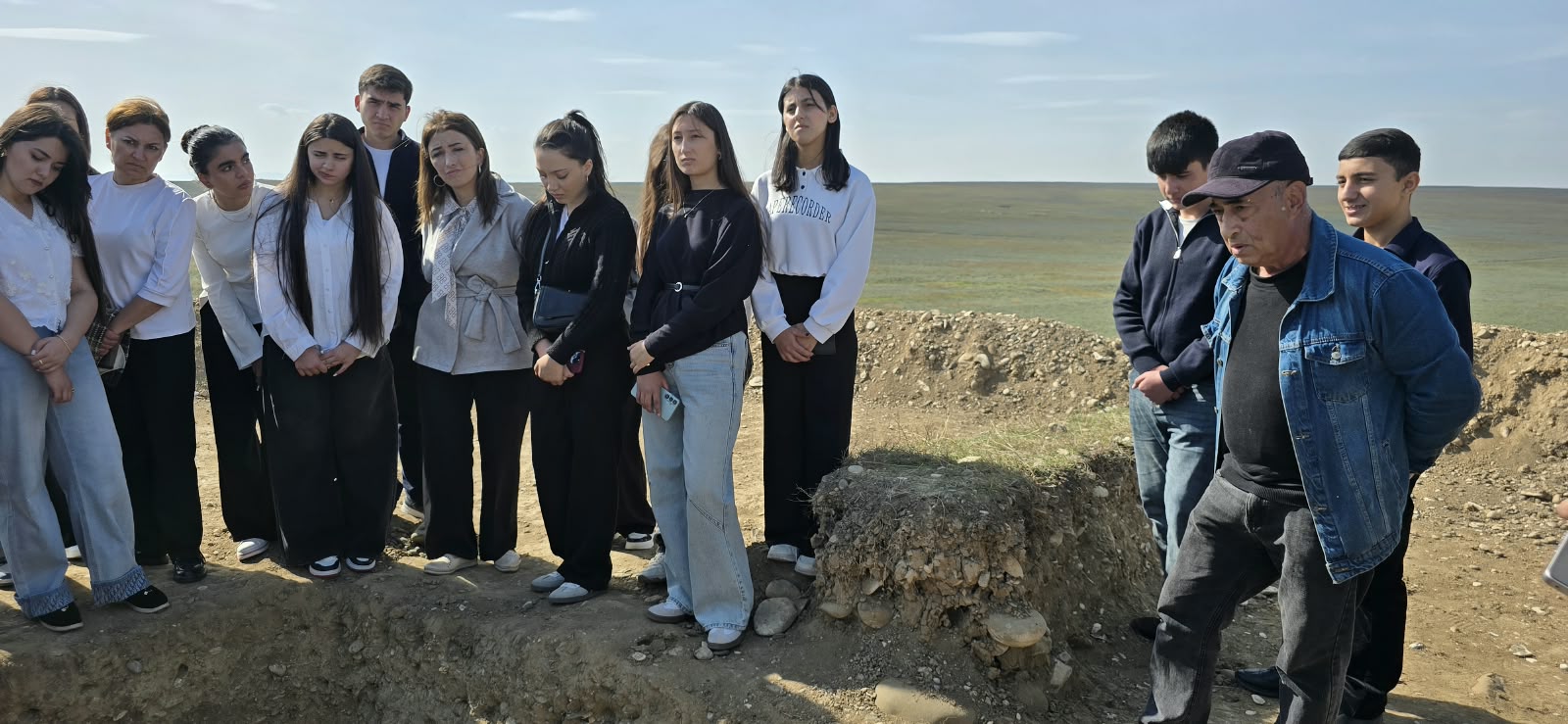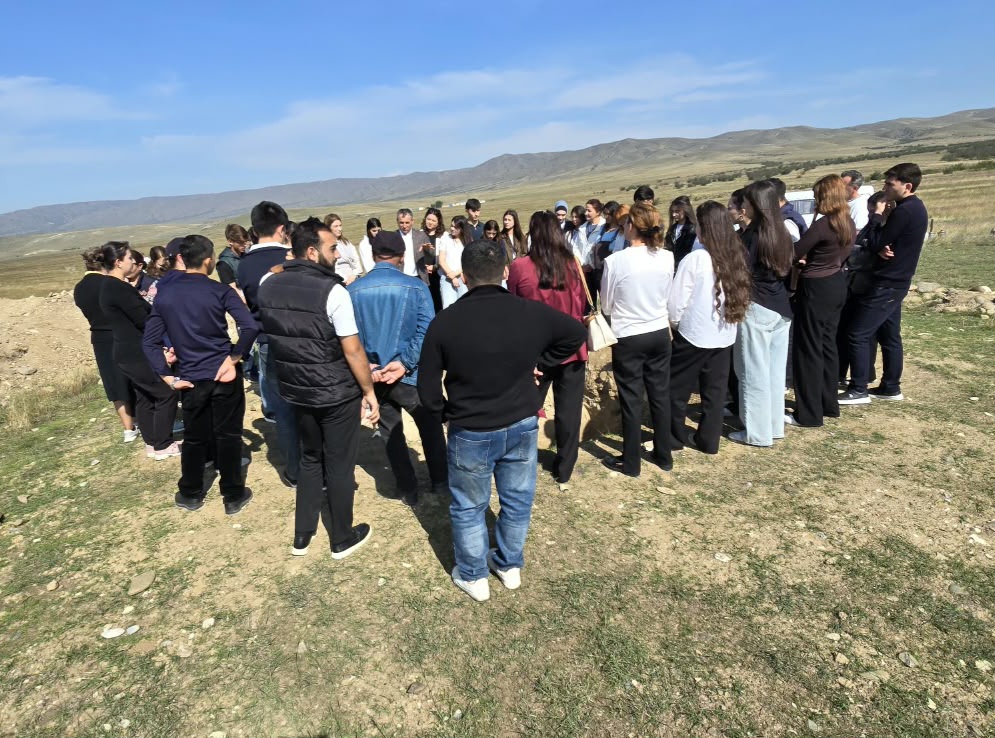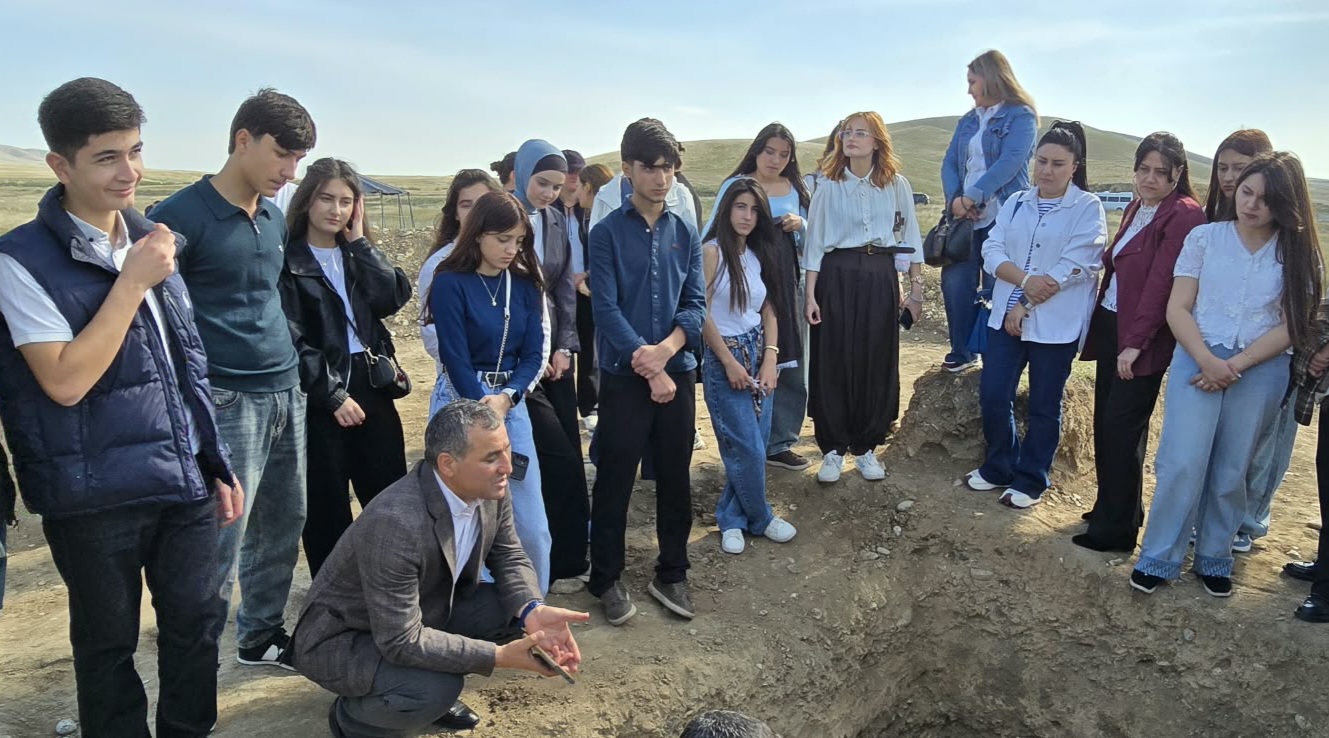
As part of the project “Scientific-Archaeological Excavations in Keshikchidag and Summer School 6,” implemented on the territory of the “Keshikchidag” State Historical and Cultural Reserve—under the management of the State Service for Protection, Development and Restoration of Cultural Heritage under the Ministry of Culture—and in partnership with the Institute of Archaeology and Anthropology of ANAS, the management, teachers, and students of the Gazakh State Social and Economic College visited the reserve area.
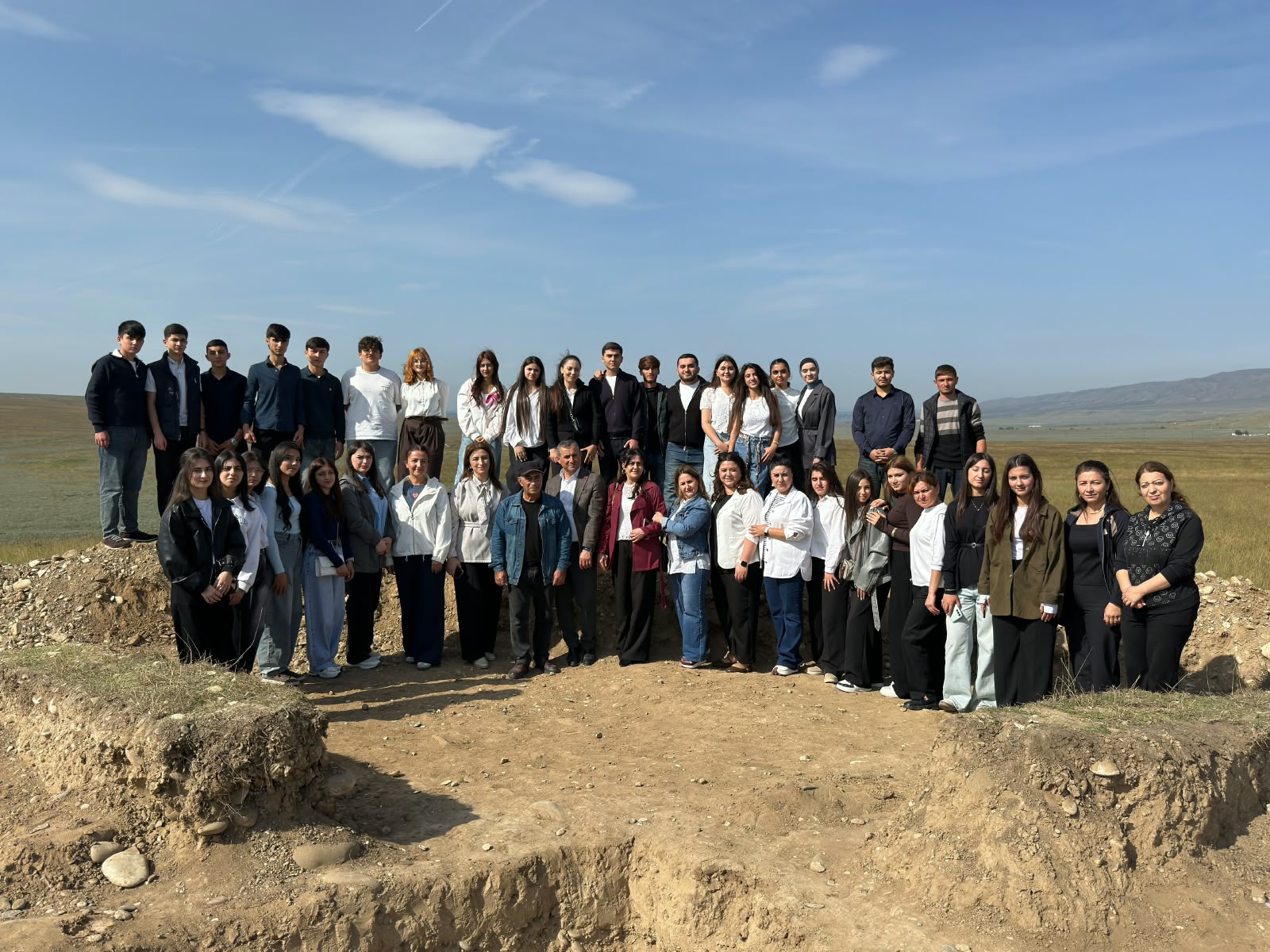
The guests closely familiarized themselves with the archaeological excavation works carried out in the Sariyokhush mounds located in the Keshikchidag Mounds Valley and received detailed information regarding the purpose, progress, and scientific significance of the research conducted in the area. Leading research fellow of the Institute of Archaeology and Anthropology of ANAS, PhD in History Vagif Asadov, informed the visitors about the excavation process, the historical significance of the discovered archaeological materials, and their role in studying the social life, burial customs, and cultural traditions of ancient times.
The project “Scientific-Archaeological Excavations in Keshikchidag and Summer School 6” holds great significance in terms of scientifically studying Azerbaijan’s ancient history and rich cultural heritage, preserving archaeological monuments, and passing them on to future generations. The project also serves to convey scientific knowledge to a broader audience, increase youth interest in history and archaeology, and enrich theoretical knowledge with practical observations. Such educational visits are of special importance for strengthening the connection of teachers and students from higher and vocational education institutions to the national-cultural heritage, instilling the importance of preserving historical monuments, and promoting archaeological research to the public.